
When Ordinary People Become Extraordinary: The Volunteers Who Help Israel Stand Strong
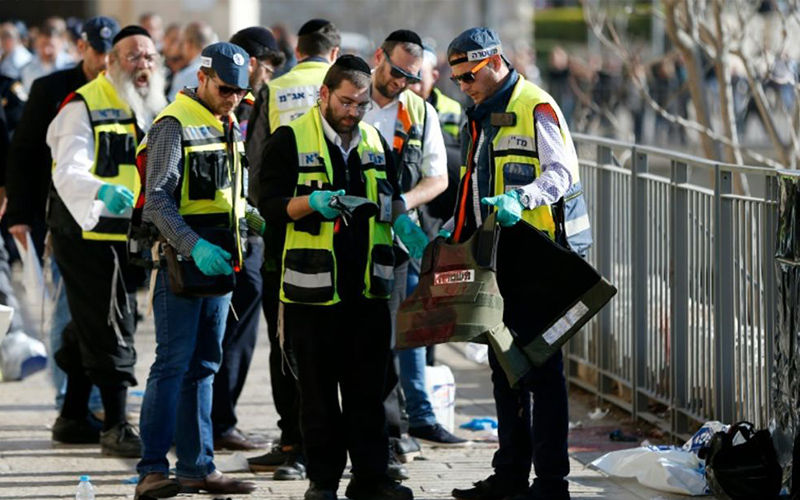
When disaster strikes, most people run away from danger. A few run toward it.
They leave their homes in the middle of the night. They step away from family dinners, work meetings, and personal plans. They answer a phone call, hear an alert, or receive a message—and within minutes, they are on the road.
Not because they are being paid.
Not because they are seeking recognition.
But because someone, somewhere, needs help.
These are the volunteers of ZAKA Search & Rescue. Across Israel, they are often among the first people to arrive when tragedy unfolds. They search for the missing, assist the injured, support grieving families, and respond to emergencies that most people hope they never have to witness.
In a world where volunteerism is declining and emergency services are facing increasing pressure, Israel has become an example of what can happen when a society invests in ordinary citizens and empowers them to serve. Rather than shrinking, Israel’s volunteer emergency-response network continues to grow, with thousands of individuals dedicating their time, skills, and energy to protecting their communities.
At the heart of this movement is ZAKA Search & Rescue, an organization with more than 4,000 trained volunteers operating around the clock across Israel. Originally established to ensure dignity for the deceased in accordance with Jewish tradition, ZAKA has evolved into a comprehensive emergency-response network that assists the living, supports families, and strengthens resilience in times of crisis.
But the story of ZAKA is not really about an organization.
It is about people.
It is about what happens when ordinary people choose to become part of something larger than themselves.
The Faces Behind the Uniforms
When people imagine first responders, they often picture professional firefighters, paramedics, police officers, or soldiers. Yet many of ZAKA’s responders spend their days in entirely different professions.
One volunteer may be a software engineer. Another may be a teacher. Others are business owners, psychologists, medical professionals, divers, construction workers, accountants, or university students.
What unites them is not a job title.
It is a shared sense of responsibility.
The diversity of backgrounds found among ZAKA volunteers has become one of the organization’s greatest strengths. Skills developed in everyday life often become invaluable during emergencies. Analytical thinking helps coordinate searches. Technical expertise improves rescue operations. Mental-health professionals provide emotional support to families facing unimaginable circumstances. Community leaders bring empathy, communication, and calm during moments of chaos.
As Dubi Weissenstern, CEO of ZAKA Search & Rescue, explains:
“Resilient societies are not built only through government institutions. They are built through ordinary people willing to step forward in extraordinary moments.”
Those words capture something profound.
Emergency response is not only about equipment, vehicles, technology, or training.
It is also about human beings choosing to show up when others are suffering.
October 7 and the Power of Preparedness
The importance of trained civilian responders became painfully clear on October 7, 2023.
As communities across southern Israel came under attack, emergency situations developed simultaneously in multiple locations. In many areas, civilian volunteers, community medics, search-and-rescue personnel, and local emergency teams were among the first people to respond.
They helped evacuate families.
They assisted the wounded.
They supported victims and communities under unimaginable circumstances.
What made their response possible was not luck or improvisation.
It was preparation.
For years, organizations such as ZAKA had invested in training, readiness exercises, communications systems, protective equipment, and volunteer development. These investments ensured that when a crisis occurred, trained responders could act immediately and effectively.
Emergency preparedness is not built during a crisis.
It is built before the crisis arrives.
And that preparation saves lives.
Why Volunteers Matter More Than Ever
Across North America and much of the world, emergency services face growing challenges. Volunteer fire departments struggle to recruit members. Search-and-rescue organizations face shortages. Emergency medical services report increasing difficulties attracting and retaining volunteers. Yet millions of people continue to depend on these individuals during emergencies.
The lesson from Israel is clear.
Volunteers are not a secondary layer of support.
They are an essential part of community resilience.
The strongest emergency-response systems are not built around a choice between professionals and volunteers. They are built on partnership.
Professional responders provide expertise, structure, and leadership. Volunteers provide local knowledge, rapid response capacity, additional manpower, specialized skills, and community connections.
Together, they create stronger, faster, and more resilient systems.
As Weissenstern noted, modern crises unfold too quickly and unpredictably for professionals alone to carry the entire burden. Whether responding to terror attacks, natural disasters, mass-casualty incidents, or other emergencies, prepared volunteers can mean the difference between chaos and coordination—and sometimes between life and death.
Supporting Those Who Serve
Behind every emergency response is a human story.
The volunteer who spends hours searching for a missing child.
The responder who comforts a grieving parent.
The team member who leaves home in the middle of the night to help someone.
The first responder who witnesses traumatic events carries those memories long after the emergency ends.
While these volunteers dedicate themselves to helping others, they also need support.
Training must be ongoing.
Equipment must be maintained.
Communications systems must remain operational.
Mental-health support must be available.
Recruitment and volunteer development must continue.
Preparedness requires investment long before an emergency occurs. That is why strengthening emergency-response support is so important.
The Israel Magen Fund of Canada (IMFoC) is committed to promoting health, supporting emergency response initiatives, and strengthening community resilience through programs that save lives and assist those affected by crises.
To advance these objectives, IMFoC partners with ZAKA Search & Rescue to support emergency response services and preparedness initiatives in Israel. Through this partnership, IMFoC helps strengthen the capacity of emergency responders who provide critical assistance during crises. This includes supporting initiatives that improve operational readiness, strengthen emergency response resources, and promote the well-being of those who serve on the front lines.
Every emergency begins with a call for help.
What happens next often depends on whether trained responders can reach people in time.
By strengthening emergency-response services, IMFoC is helping ensure that communities have access to the support they need when every minute matters.
A Shared Responsibility
The story of ZAKA's volunteers highlights an important lesson: strong communities depend on people being willing to help one another. Emergencies require trained responders, but resilience comes from individuals who choose to get involved, support their communities, and prepare before a crisis occurs.
Every day, ZAKA volunteers demonstrate this commitment through their actions. They come from many different backgrounds—a teacher answering a late-night emergency call, a business owner joining a search effort, a psychologist supporting a grieving family, or a parent stepping forward to help someone in need.
These volunteers are not motivated by recognition. They serve because they believe in helping others during difficult times. For the people they assist, what often matters most is knowing that someone was there when help was needed.
The dedication of thousands of volunteers, together with the support of donors and partners, helps ensure that lifesaving assistance is available when communities face emergencies.


